―Aiming to implement Japan-made humanoids in service operations and other fields―
KDDI CORPORATION
AVITA, Inc.
Tokyo, March 2, 2026―KDDI CORPORATION and AVITA, Inc. began a strategic business partnership on March 2 with the aim of utilizing Physical AI, an approach that achieves real-world physical effects through humanoids and other forms of hardware.
In this partnership, both companies will combine AVITA's knowledge in avatar creation and control technologies with Physical AI technologies developed in Japan to create humanoids, and will build an environment for them to work smoothly in society by utilizing KDDI's telecommunication infrastructure.
By utilizing AVITA's AI technology and KDDI's knowledge of using data to train humanoid AI, the companies will enhance the humanoids' accuracy in autonomous movement. Through these efforts, the companies aim to create use cases for Japan-made humanoids in new fields, such as customer service tasks that involve conveying a sense of security through facial expressions and other forms of nonverbal communication.
KDDI will also consider linking this initiative with the GPUs and on-premises services for Google's high-performance generative AI model, Gemini, provided by the Osaka Sakai Data Center, which started operations in January 2026. [ 1]
1]
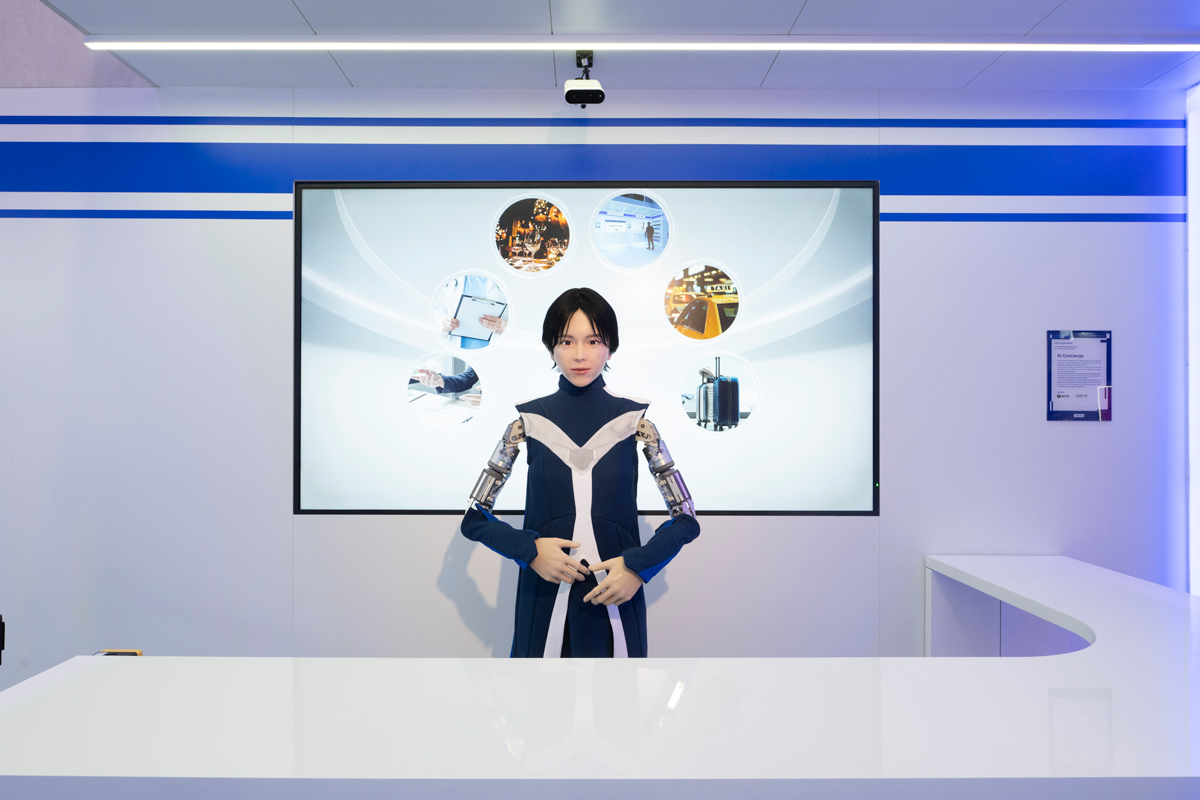
At MWC26 Barcelona, the world's largest mobile technology exhibition and conference held in Spain from March 2 to 5, 2026, KDDI exhibits a conceptual model of a humanoid using Physical AI to demonstrate how it can serve customers. Visit this link for more details:
KDDI and AVITA have collaborated in the past to utilize digital avatars in a Next-Generation Remote Customer Service Platform [2], where people can receive remote assistance for essential services in their daily lives. This platform has been introduced at Lawson, as well as at au Style, au Shops, and other locations, thereby helping to solve issues faced by service users and providers. Going forward, the companies will expand their collaboration beyond verbal communication using digital avatars into the field of Physical AI, which enables free-form movement in physical space as well as nonverbal communication.
By utilizing Japan-made humanoids for customer service tasks across a wide range of fields, including retail, medicine, welfare, entertainment, culture, and traditional arts, the companies will tackle labor shortages and other issues faced within these fields.
■Background
- In recent years, a wide range of industries have faced challenges in responding to labor shortages and securing a workforce due to factors such as an aging and declining population. At the same time, generative AI, industrial robots, and other digital technologies are rapidly taking root across all areas of daily life.
- While industrial robots excel at performing individual actions, there are still challenges in responding to mechanical failures and other sudden issues, as well as in achieving general-purpose use for tackling multiple tasks in a multifaceted manner. Moreover, they cannot be utilized for tasks that require nonverbal communication, such as nodding while maintaining eye contact with customers, pointing with fingers to give directions, and conveying a sense of security through facial expressions.
- KDDI and AVITA will create use cases for humanoids built with Physical AI for tasks that involve dealing with customers and require hospitality and complex dialogue. The two companies will work to implement these humanoids in society.
- AVITA will launch a humanoid and Physical AI business and provide integrated services that include the development, sale, and operation of humanoids while building on the foundation of the avatar technology, remote control technology, and dialogue-based AI it has cultivated to date.
■Key Areas of Partnership
1. Building telecommunication infrastructure for the development and smooth operation of humanoids
- For humanoids to function smoothly in the real world, it is essential to build a telecommunications environment that can transmit large volumes of data, such as visual information and control commands, in real time, and that can process this data with low latency.
- KDDI will use its telecommunications technology to build infrastructure that supports the remote control and AI processing of humanoids developed by AVITA. This will enable high-quality interactions when serving customers.
2. Accumulating humanoid movement data
- The companies will use a cloud platform to collect and analyze visual and movement data obtained by humanoids when dealing with customers. This data will be used to train AI, and thereby boost the accuracy of the humanoids' autonomous operation.
- KDDI will also consider linking this initiative with the GPUs and on-premises services for Google's high-performance generative AI model, Gemini, provided by the Osaka Sakai Data Center, which started operations in January 2026. [1]
3. Considering trials with a view toward launching a commercial service
- The two companies plan to introduce this service through trials at real-world commercial facilities from the fall of 2026 onward, ahead of a full commercial launch.
- The companies will also consider implementing the service at au Style, au Shops, and other customer touchpoints in the future.
■Main Roles Assumed by Each Company
| KDDI |
|
|---|---|
| AVITA |
|
■About the Humanoid Concept Model
1. Overview
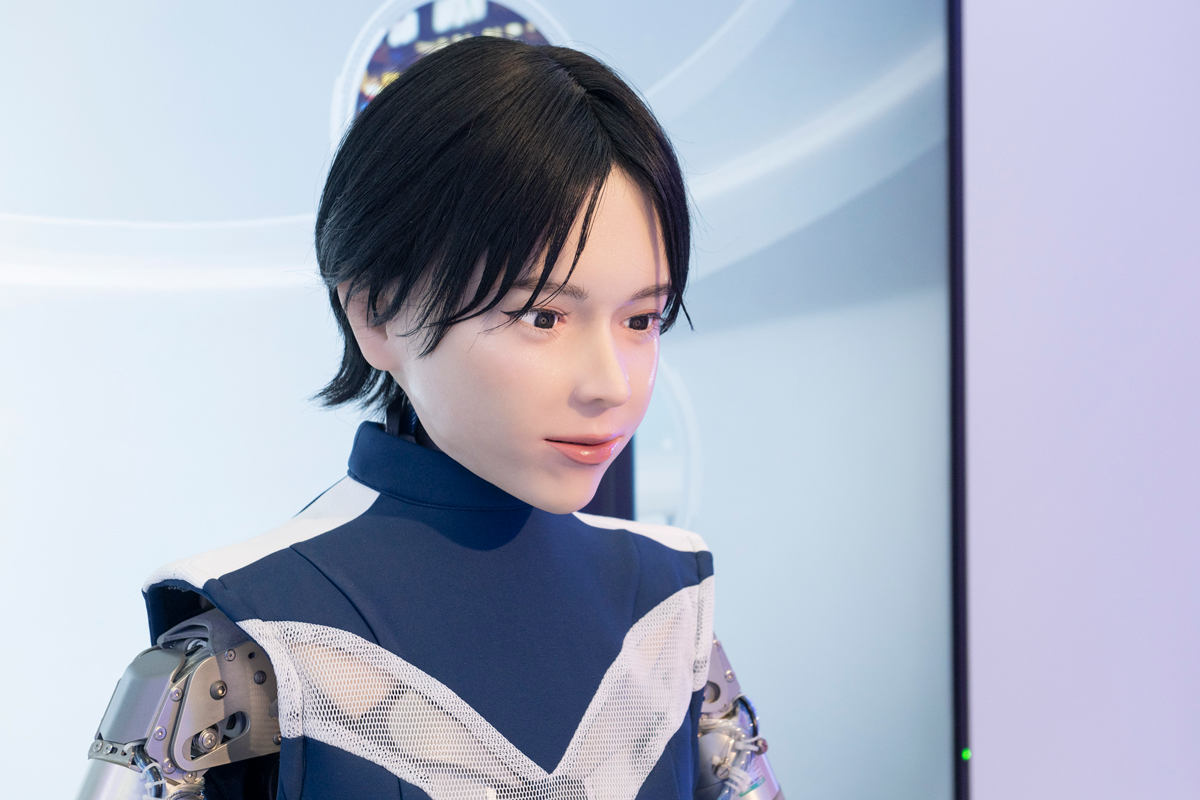
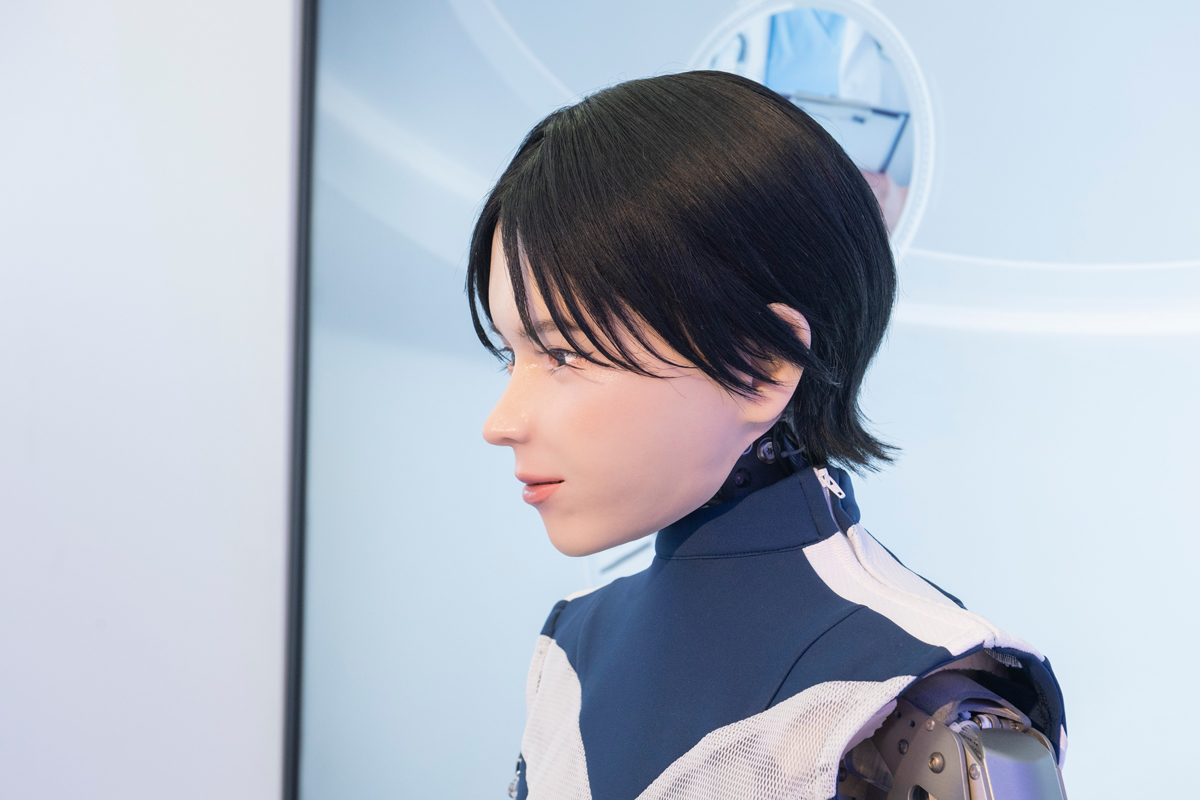
- The concept model for customer service using Physical AI in this partnership has been made with updated features based on a humanoid designed by Hiroshi Ishiguro, who served as a producer at Expo 2025 Osaka, Kansai, Japan (Future of Life Pavilion) and is the CEO of AVITA, Inc.
2. Features
- The base framework is designed to be small in size while also resembling the physique of Japanese people. The model also features silicone skin and a special mechanism for creating facial expressions that convey warmth, resulting in an appearance that people can easily connect with.
- The model is powered by a pneumatic system, making it quiet and capable of running for extended periods, while also achieving elegant movements with human-like variability. It adjusts its facial expressions and movements to match the subject of conversation, and detects movement using the camera sensors installed in its eyes to achieve a natural sense of empathy.
- The model moves autonomously based on learned visual and movement data, making it easy to customize its responses for different use cases.
- [1]
- [2]
- *Gemini is a trademark of Google LLC.
- *Other company and product names are the trademarks or registered trademarks of their respective owners.
- *The information contained in the articles is current at the time of publication.
Products, service fees, service content and specifications, contact information, and other details are subject to change without notice.
Downloads