―AI data center to accelerate the widespread implementation of AI in pharmaceuticals, manufacturing, and other fields―
KDDI CORPORATION
Tokyo, January 22, 2026―KDDI will commence operations at the Osaka Sakai Data Center on January 22. This AI data center boasts excellent access, owing to its location in the vicinity of urban Osaka―a hub for industry and commerce. By providing GPUs and on-premises services for Google's high-performance generative AI model Gemini, KDDI aims to realize widespread AI implementation within the pharmaceutical and manufacturing industries, as well as many other fields. [ 1] [2]
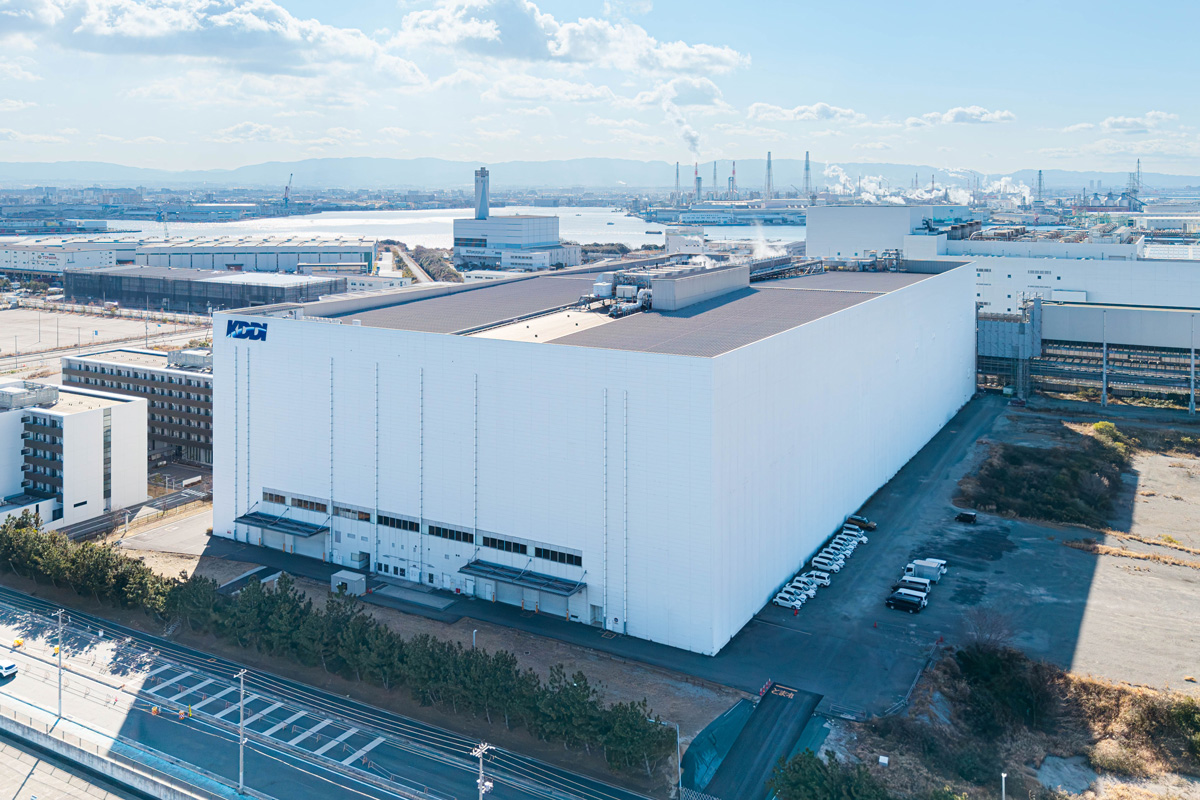
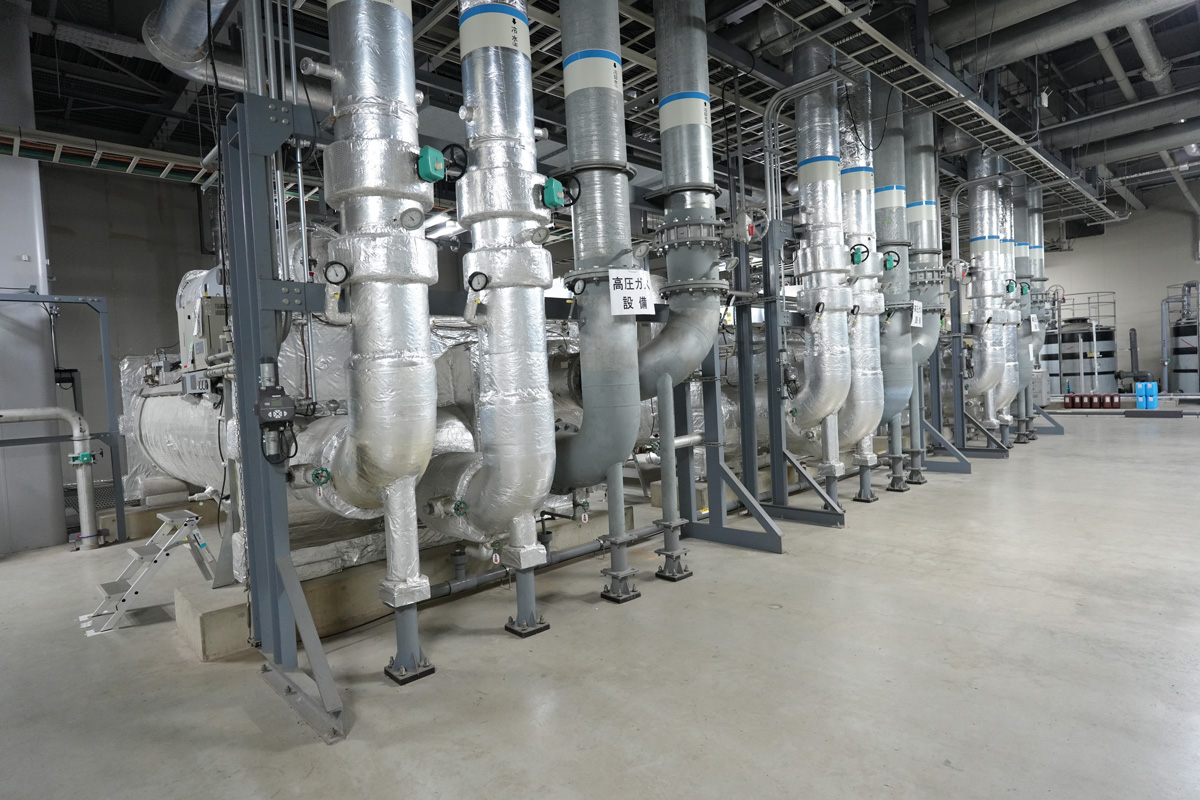
This AI data center reuses the high-capacity power and cooling facilities from the site of the Sharp Sakai Plant that KDDI acquired in April 2025. KDDI is also utilizing the water-cooling technologies developed at KDDI Telehouse Shibuya Data Center, as well as the insight into building data centers it has cultivated through over 30 years of experience. As a result, KDDI was able to build the Osaka Sakai Data Center in just half a year and achieve a rapid launch with AI servers featuring systems, such as the NVIDIA GB200 NVL72, that feature powerful computational performance, practical approaches to data sovereignty and high-bandwidth, high-quality connectivity.
Going forward, KDDI will utilize this AI data center for initiatives to tackle issues in the pharmaceutical industry, while also providing assistance to the manufacturing industry and other fields in refining data analysis and developing a Japanese-made LLM.
KDDI will drive efforts to enhance digital infrastructure in a way that integrates networks with AI, including this AI data center. The company will work with a wide range of partner companies to accelerate the widespread implementation of AI, thereby helping Japan enhance its competitive edge in the industry.
The Osaka Sakai Data Center uses 100% renewable energy, and KDDI plans to switch to renewable energy for use in all its data centers both in Japan and overseas by the end of fiscal 2025. [3]
■About the AI Data Center
1. Overview
At the Osaka Sakai Data Center, KDDI has utilized the insight it has cultivated in telecommunications and the data center business for over 30 years both in Japan and overseas. The company optimized the entire process from the decision to acquire the land and sign contracts to building the facilities, thereby achieving a rapid launch.
- Acquiring the Sharp Sakai Plant
KDDI applied the evaluation method that it developed through M&A overseas to narrow down the vital criteria for evaluating business feasibility, such as earthquake resistance and the durability of the facilities as well as the environmental risks present at each site. This helped reduce the time taken to acquire the land. - Repurposing equipment for cooling and electrical power
By leveraging its experience in repurposing another facility overseas into a data center, KDDI identified the necessary repair and inspection work at an early stage, thereby minimizing new construction work and reducing the time taken for design and building. - Providing services to customers
Based on its experience in providing stable telecommunications and cloud services both in Japan and overseas, KDDI collaborated with partner companies to expedite the process from rapidly building the AI data center to launching services for customers.
| Building size | Four stories above ground |
|---|---|
| Cumulative floor space | Approximately 57,000m2 |
| Environmental responsibility | Uses 100% renewable energy |
2. Strengths
There has been demand in recent years for data centers to provide low-latency response as well as stability and continuity in services in order to foster widespread implementation of AI in many different fields. KDDI will provide AI services with low-latency and high reliability through this AI data center, which boasts excellent access with a location around 15 kilometers from Osaka's major industrial and commercial areas.
- (1) Advanced computational power and cooling technology
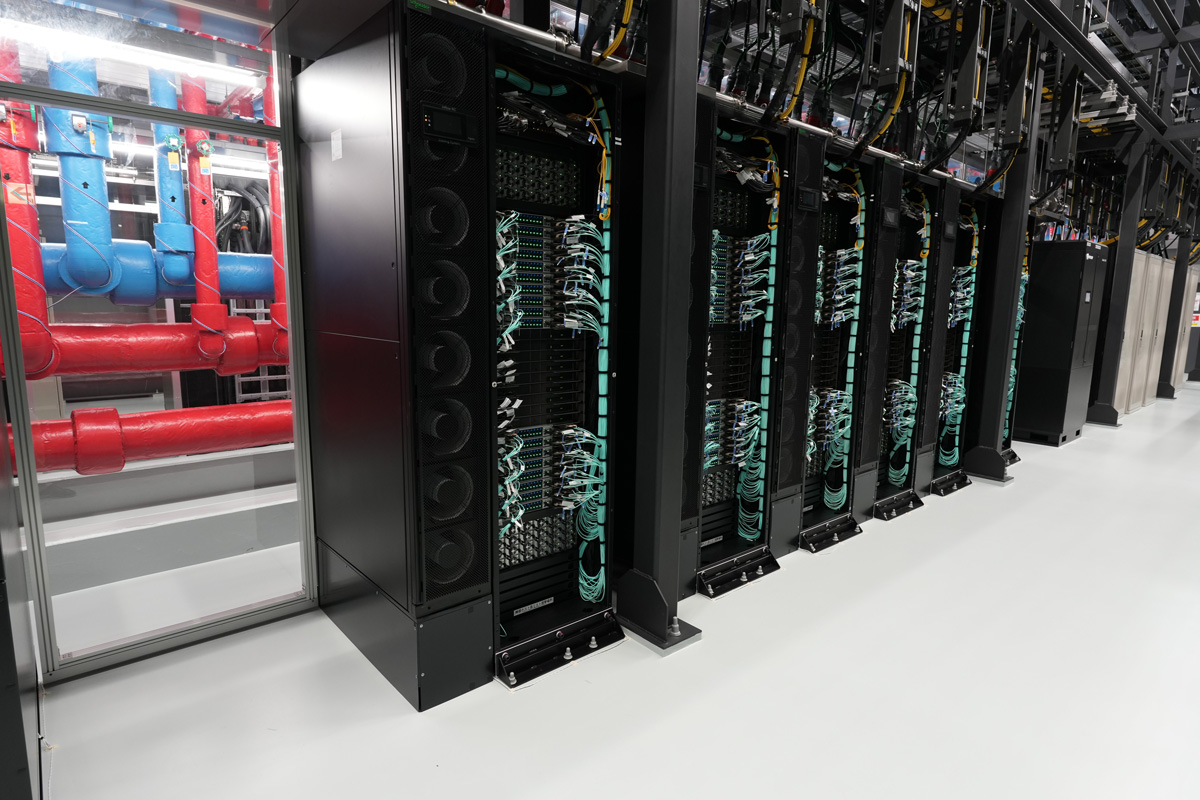
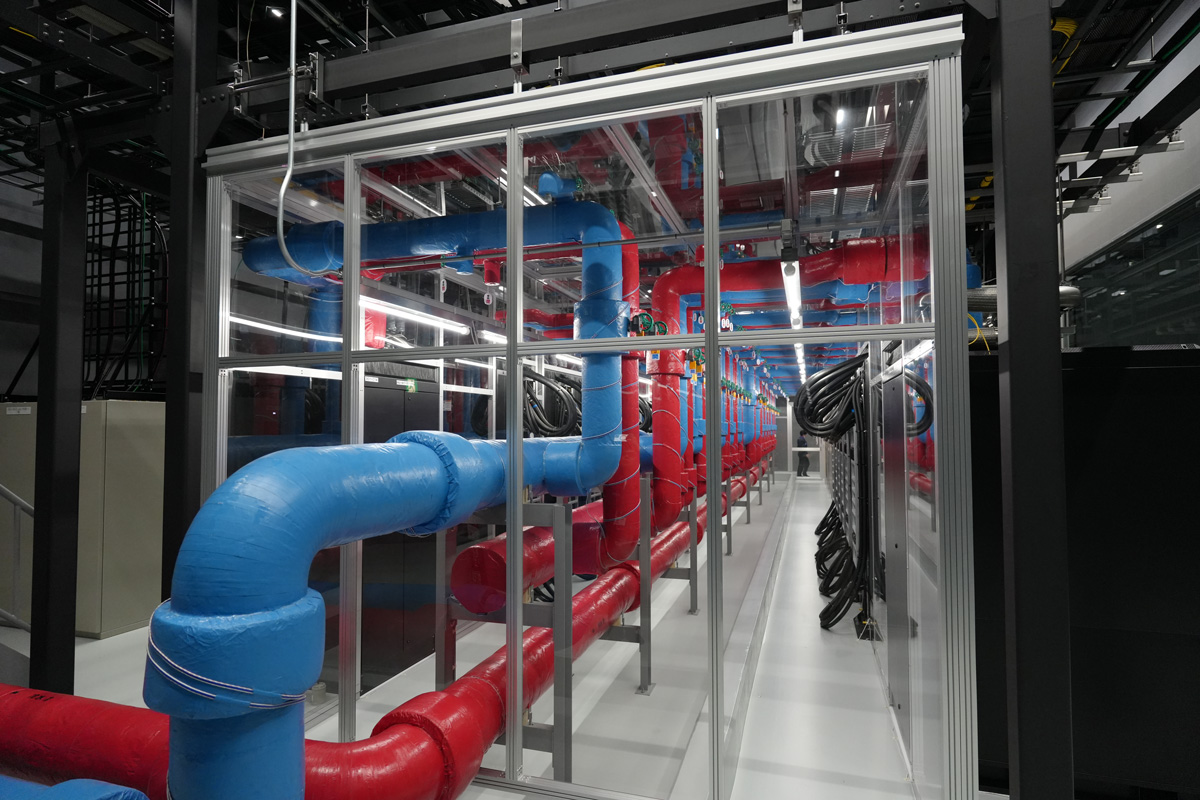
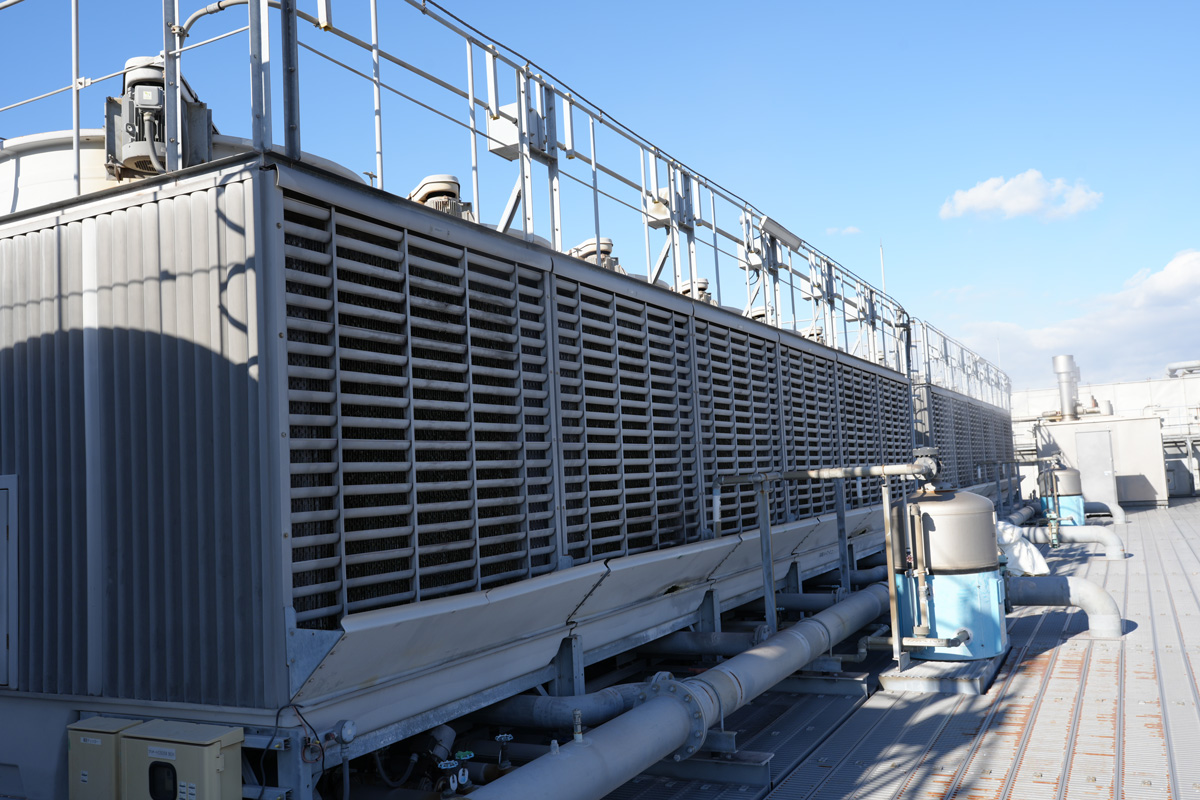
KDDI has implemented direct liquid cooling in addition to conventional air-based cooling for its AI servers, which use the strong computational power of the NVIDIA GB200 NVL72 and other systems. In addition, the company can provide stable and advanced computational power by following the facility design and operational guidelines that are specialized for liquid cooling and were established through field trials at the KDDI Telehouse Shibuya Data Center.
- (2) Securing sovereignty
Because the Osaka Sakai Data Center is operating in Japan, KDDI has established a management system in consideration of data sovereignty when using high-performance generative AI models like Gemini. Data is managed in an appropriate manner and in accordance with Japanese laws and regulations, thereby helping to mitigate risks related to data improperly being moved overseas or falling under the control of a third party.
Security camera footage, sensitive video data, corporate secrets, and other highly confidential data can be used for AI training and inference while being stored and managed inside Japan.
- (3) High-bandwidth, good-quality networking
In addition to high-bandwidth Internet connections with speeds of up to 100 Gbps, this AI data center has a closed network (KDDI Wide Area Virtual Switch 2) for handling highly confidential data in a secure manner, as well as a multi-cloud gateway that enables high-bandwidth connections with many different public clouds in a closed network. By selecting highly reliable networks to suit each use case, KDDI allows customers to take their data that was dispersed across Japan and integrate it in this AI data center, thereby enabling AI training and inference using large datasets.
3. Case studies
- (1) Pharmaceutical industry: Efforts to utilize AI technology and medical big data
KDDI and the KDDI Group company Medical Engineering Institute, Inc. (MEI) plan to work with Takeda Pharmaceutical Company Limited to utilize this AI data center from April 2026 onward in a project that will use AI in a multifaceted analysis of medical big data and explore ways to create new value for patients.
- <Current challenges>
- The analysis of medical big data is growing more and more important, though immense time and money are required to build an environment and take other steps to achieve this.
- Electronic health record data in Japan is generally divided across individual hospitals and medical institutions. Furthermore, remarks from physicians, descriptions of symptoms, and other important information are recorded in these health records as text, making it difficult to fully and effectively utilize this data.
- <Expected usage>
- By utilizing this AI data center, it will be possible to conduct the whole process from training to inference in one place using data from electronic health records in Japan as well as other kinds of medical big data. [4]
- The participants in this project can securely store medical big data in an environment that offers sovereignty and is located entirely in Japan, carry out training with this data, and then conduct inference using an LLM specialized for medicine to efficiently extract and analyze the required information from text-based data that was previously difficult to handle.
- This approach results in less time taken and lower costs involved in the data analysis process, among other efficiency boosts. In addition, KDDI and partner companies aim to visualize the signs of rare and intractable diseases based on remarks from physicians, descriptions of symptoms, and other data, while also developing a deeper understanding of patient treatment processes to thereby create new value with outcomes that help provide the ideal pharmaceuticals for each patient.
- By utilizing this AI data center, it will be possible to conduct the whole process from training to inference in one place using data from electronic health records in Japan as well as other kinds of medical big data. [
KDDI and MEI aim to provide a one-stop medical AI service with vertical integration that can be swiftly used by Takeda Pharmaceutical and other pharmaceutical companies based on the assets needed for medical big data analysis in drug discovery, clinical trials, and other activities.
- (2) Manufacturing industry: Refining fluid analysis
Morgenrot Inc. is a startup that aims to provide an ideal computing environment by visualizing, managing, and optimizing the computing resources of companies and sharing their processing power. Morgenrot and KDDI will utilize this AI data center to help achieve faster and more refined fluid analysis for product design in the manufacturing industry and other fields.
- <Current challenges>
- In the automobile development process, for example, fluid analysis is crucial for visualizing and predicting the flow of air and heat. Analysis results can help improve mileage or EV driving range, ensure safety during high-speed travel, reduce noise and increase comfort inside the vehicle, and much more.
- High-precision fluid analysis involves dividing an automobile and the space surrounding it into a fine mesh, with cells numbering in the hundreds of millions to the billions, and performing complex physics calculations within each of these cells. Conventional environments used for analysis had limited GPU speeds and processing power, making it difficult to carry out simulations with a suitable number of repetitions or to conduct large-scale analyses.
- <Expected usage>
- By combining this AI data center built in Japan with highly reliable telecommunications, it will be possible to analyze design plans, analytical insights, and other confidential information while maintaining security.
- The powerful computational performance at the data center can be leveraged to cut the time taken for conventional approaches to fluid analysis, or to conduct large-scale and high-resolution fluid analysis simulations.
Morgenrot and KDDI seek to use this AI data center to contribute not just to automobile manufacturers, but also to the development of aircraft, railway carriages, ships, and other objects for which fluid analysis plays a crucial role.
- (3) Conducting development and inference for Japan-developed AI
KDDI and the KDDI Group company ELYZA, Inc. aim to develop and provide services with models that are specialized for individual fields or companies, in addition to conventional base models, thereby accelerating the development and widespread implementation of Japanese-made AI.
- <Current challenges>
- In specialized fields such as medicine, finance, and government administration, general-purpose AI models do not always have adequate support for technical terms or industry-specific regulations, making it difficult to pursue full-scale implementation for use in real-world operations.
- <Expected usage>
- This AI data center will enable companies to safely use confidential information to train AI in an environment with data sovereignty, allowing for the development of models that are specialized for individual fields or companies.
- By conducting training with knowledge that is specific to specialized fields and that has not been fully covered by general-purpose AI systems, it is possible to realize a level of performance, cost, and speed that suits each field and use case.
- Companies will be able to utilize their own confidential data to hone a unique competitive edge.
KDDI and ELYZA aim to utilize this AI data center to provide integrated services in one place for models that are specialized for individual fields or companies, including everything from development to inference.
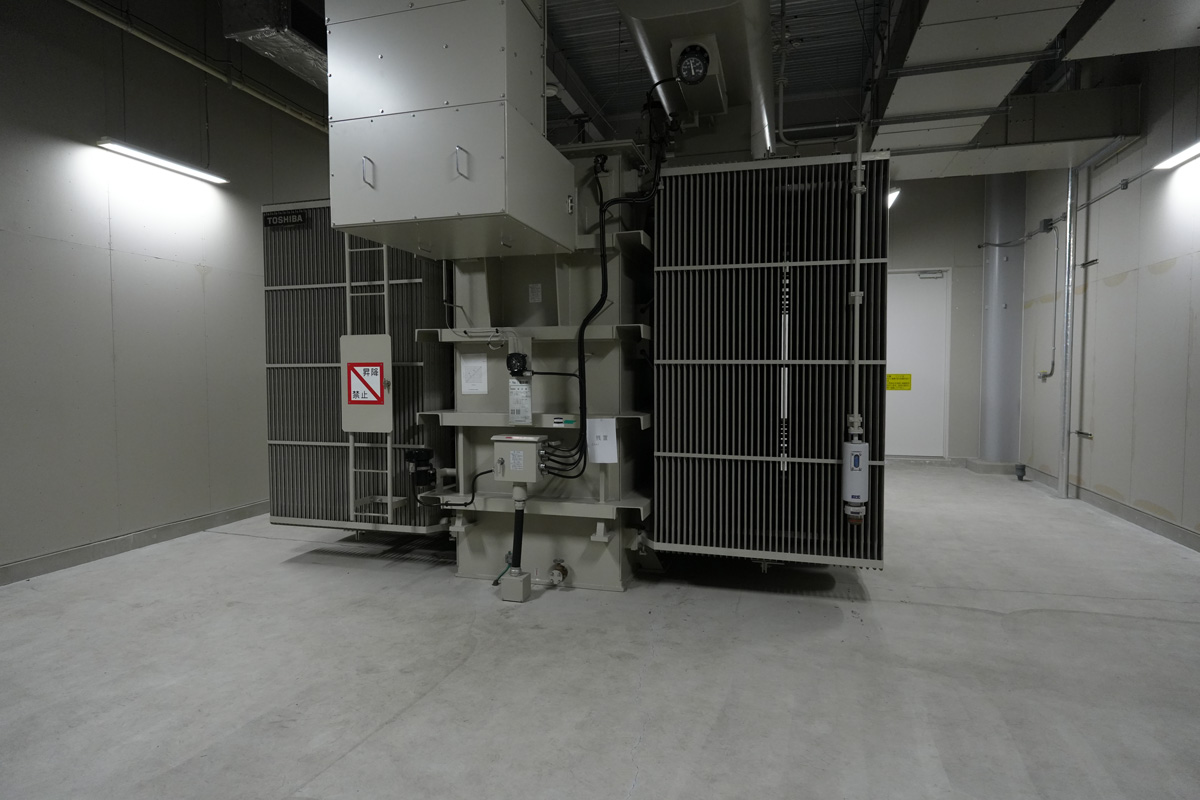
4. Equipment at the AI data center
■Inquiries
If you would like to utilize this AI data center, please refer to the services page (in Japanese only)Open in a new window for KDDI GPU Cloud and contact KDDI.
■KDDI Booth at MWC26 Barcelona
MWC26 Barcelona is the world's largest mobile technology exhibition and conference, and will be held from March 2 to 5, 2026 in Spain. The KDDI booth at this event will display an exhibit about the Osaka Sakai Data Center.
■Related Articles
- [1]The KDDI GPU Cloud service that offers access to the NVIDIA GB200 NVL72 systems in the Osaka Sakai Data Center will launch trials on January 22, 2026, and applications for use of the service will be accepted from April 1, 2026 and onward.
- [2]
- [3]
- [4]In line with Japan's Personal Information Protection Act, this process does not include any information that can be used to identify individuals.
- *The information contained in the articles is current at the time of publication.
Products, service fees, service content and specifications, contact information, and other details are subject to change without notice.
Downloads